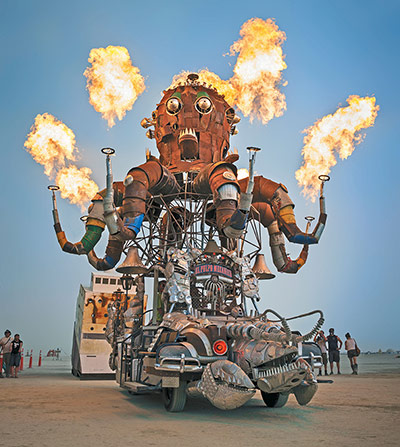
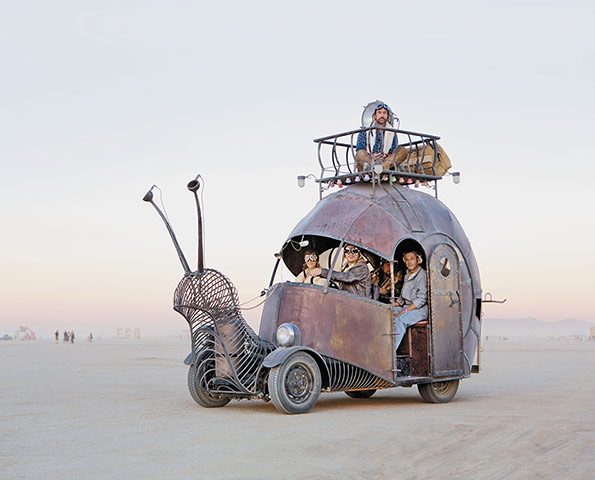
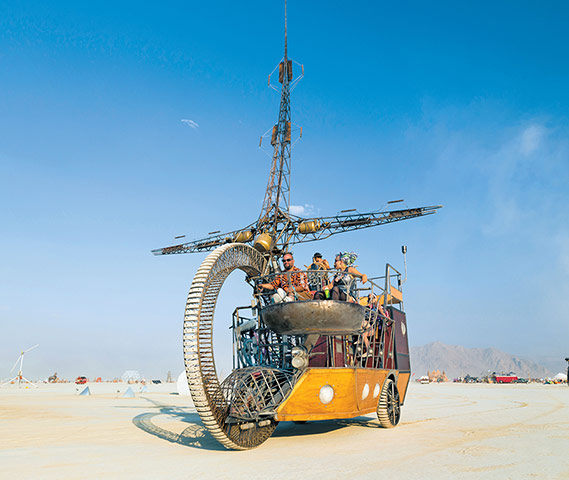
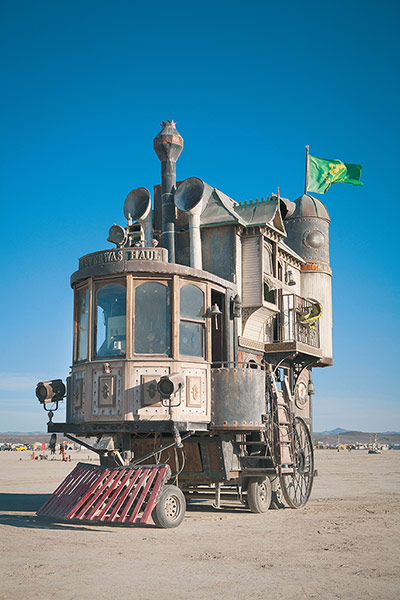
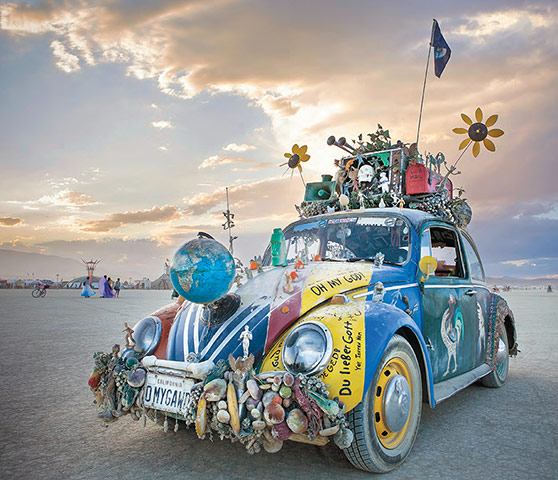
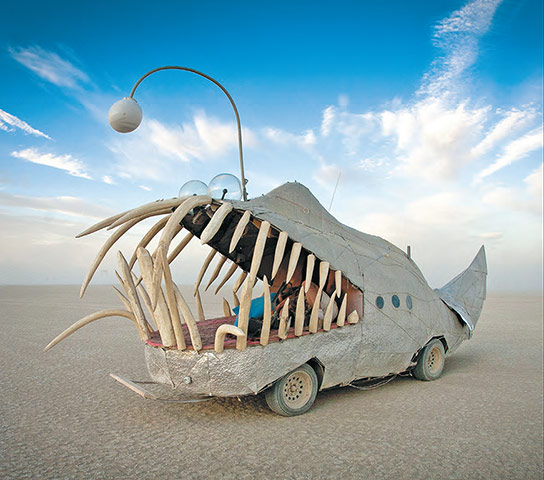
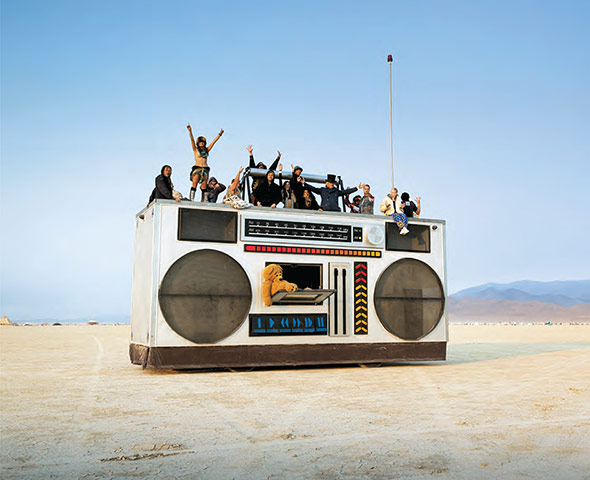
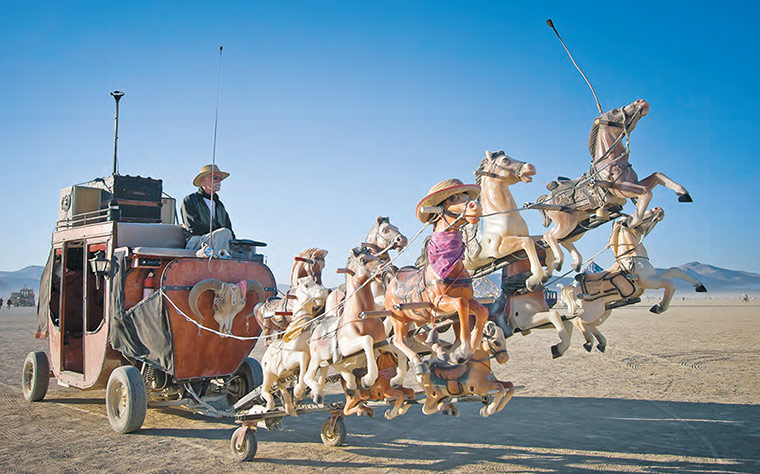
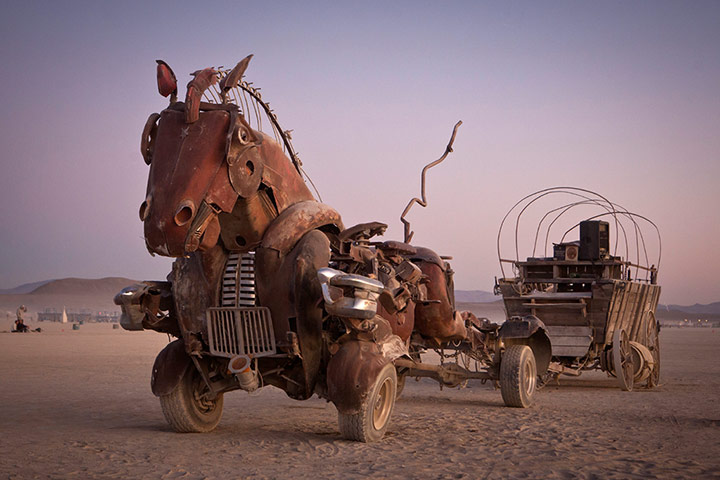
Motorised vehicles aren't allowed at Nevada's annual Burning Man festival, and vehicles on site have been so radically altered that they are more art than car. Sidney Erthal and Scott London joined the 68,000-strong crowd to photograph the results
Every August, Black Rock City rises out of the vast, desolate playa of the Black Rock desert to become one of the biggest cities in Nevada. Seven days later, it vanishes.Photograph: Scott LondonThis temporary community is known as Burning Man. Described as “Summer camp for adults” and “The cheapest trip to Mars you’ll ever take”, Burning Man had humble beginnings on a San Francisco beach. Photograph: Scott LondonIn 1986, Larry Harvey, a single dad, decided to build a wooden figure of a man to burn on the beach as a bonding exercise with his son. It became an annual tradition, attracting several hundred people until police intervened, leading to its relocation in 1991. Photograph: Scott LondonLast year’s event attracted 68,000 people. Artists, or “burners”, create epic installations, some of which feature in a new book, Burning Man: Art On Fire, by Jennifer Raisner. One category for their creations is Art To Ride, or Mutant Vehicles. Photograph: Scott LondonMotorised vehicles are not allowed in Black Rock City, so those wishing to traverse the playa have to do so in a vehicle so radically altered that it is more art than car. Photograph: Scott LondonLicences are granted by the Department of Mutant Vehicles, to ensure they meet safety requirements, especially those that feature flame effects, dancefloors and bars. Photograph: Scott LondonHarrod Blank, one of the first burners to bring an art car to the festival, explains their evolution: “You have to have enough wow factor just to earn a licence. It has to be something no one’s done… or have something for passengers to be engaged with.”Photograph: Scott LondonBeing immersed in the artist’s vision is key, he says. “You are providing something that is so fresh and so exhilarating, it completely alters your mind’s view of the world. That’s when it reaches the pinnacle of how great Burning Man can be.Photograph: Scott LondonBurning Man: Art On Fire is published by Race Point Publishing at £21.99. To order a copy for £16.49, including UK mainland p&p, go to theguardian.com/bookshop.Photograph: Scott London