
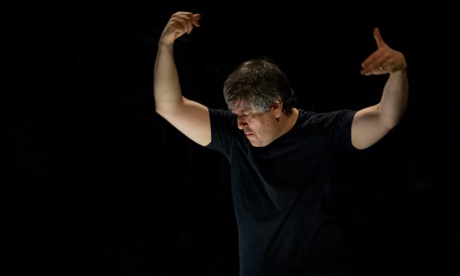
Other major opera house orchestras have a life in the concert hall. So why not London too? After 13 years as Covent Garden’s music director, Antonio Pappano has decided to dip a toe in the water. “It’s been my dream to get my orchestra up here from down there,” he said in a short speech from the stage, pointing down to the pit before this inaugural annual venture.
Playing on the stage, the orchestra of the Royal Opera House looked a bit boxed in by the imported wooden backdrops and ceilings, installed to help push the sound outwards. It came over bright and well balanced in the rear stalls, but this opera house has acoustic Bermuda triangles, so it is hard to know if the sound worked as well higher up and further away.
To Pappano’s credit, there was neither a symphony nor an opera excerpt on offer. Instead, he chose repertoire that played to his musicians’ strengths as colourists, accompanists and as a dance orchestra. Ravel’s shimmering orchestration of Une Barque sur l’Océan opened a French first half of the evening, followed by a crisp and sharply pointed account of his Alborada del Gracioso, which gave the wind principals a rare chance to be seen as well as heard. Anna Caterina Antonacci, excelling as so often in French repertoire, then gave a bright-toned and idiomatic account of Chausson’s Poème de l’Amour et de la Mer, with Pappano and his orchestra in their element as languorous accompanists.
After the interval Bernstein’s Fancy Free showed this orchestra can really swing, the piano rhythms jaunty and precise but with the right touch of balletic grace and Coplandesque stillness nicely brought out too. An excitingly paced account of Scriabin’s indulgently overwrought Poème de l’Extase rounded things off.
London is not short of orchestral concerts but Pappano’s experiment with this niche approach for his excellent orchestra was an undoubted success.
